Real places. Verified numbers. Children in school.
This is not a projection. This is what three years of work in Southwest Cameroon has produced — documented, audited, and built into communities that are now managing the change themselves.
What We Learned From The Field
Before designing interventions, HSFAN participated in assessments and community engagements to understand the real factors affecting education, health, and protection in vulnerable communities.
01
Southwest & Northwest Regions
WASH Needs Assessment
The WASH needs assessment, designed by a cluster of national and international organizations, evaluated water, sanitation, and hygiene (WASH) facilities in 6 divisions and 31 subdivisions of Cameroon’s South-West Region. Hope Spring for All Nations participated, focusing on rural communities in Buea, Tiko, and Muyuka. The survey assessed the state of WASH facilities in schools, hospitals, and communities severely impacted by the Anglophone crisis, which had destroyed many such infrastructures due to widespread burning of institutions.
Conducted over three days (November 20–22, 2024), the assessment examined the functionality and adequacy of WASH systems to meet the needs of affected populations, highlighting gaps and intervention priorities to ensure safe and healthy environments. The survey also identified broader challenges faced by vulnerable populations, including limited access to education and health services, particularly in remote, crisis-affected areas.
02
Southwest Region
Vulnerability Needs Assessment
A structured vulnerability assessment was conducted in September 2024 to map the specific educational gaps across target communities, identifying which children were out of school, why, and what interventions would have the highest return. This evidence base directly shaped HSFAN’s 2025 education strategy.
03
Fako Division
Education Needs Assessment
A structured education needs assessment engaged 291 learners to map learning environment gaps, teacher capacity constraints, and materials shortfalls across partner communities. This baseline data continues to inform HSFAN’s targeted programming and is shared with donor partners to demonstrate evidence-driven investment decisions.
291 learners assessed
Evidence-based strategy
By the Numbers — 2022 to 2025
XAF 25,007,500 — independently audited income, 2025
Net surplus: confirmed in audited 2025 financial statements
Auditor: ABA International Consultancy (ABICCY)
All projects organised under four strategic pillars
HSFAN’s interventions are not scattered acts of charity. They are structured, evidenced, and sequenced across four pillars that together build durable resilience in conflict-affected communities.
WASH & Water Access
Education
Protection and Gender
Livelihoods
Pillar 1 · WASH & Water Access
Clean Water is Not a Comfort. It is Survival.
In communities where waterborne disease is endemic and displacement has severed household WASH infrastructure, HSFAN’s water programming addresses the most acute physical need. Between 2024 and 2025, HSFAN moved from awareness and health sensitisation to permanent water infrastructure, a progression that captures how the organisation translates funding into lasting community assets.
01
Southwest Region
Water is Life
HSFAN’s flagship water access project, implemented May through December 2024. The programme combined community water point sensitisation, hygiene promotion, and direct health services, integrating WASH and health delivery to address waterborne disease at source.
300 waterborne disease prevention
100 diabetes risk screenings
190 blood pressure screenings
590 total WASH beneficiaries
02
GS Great Soppo, Buea
Water Stand Construction — GS Great Soppo (Phase 1)
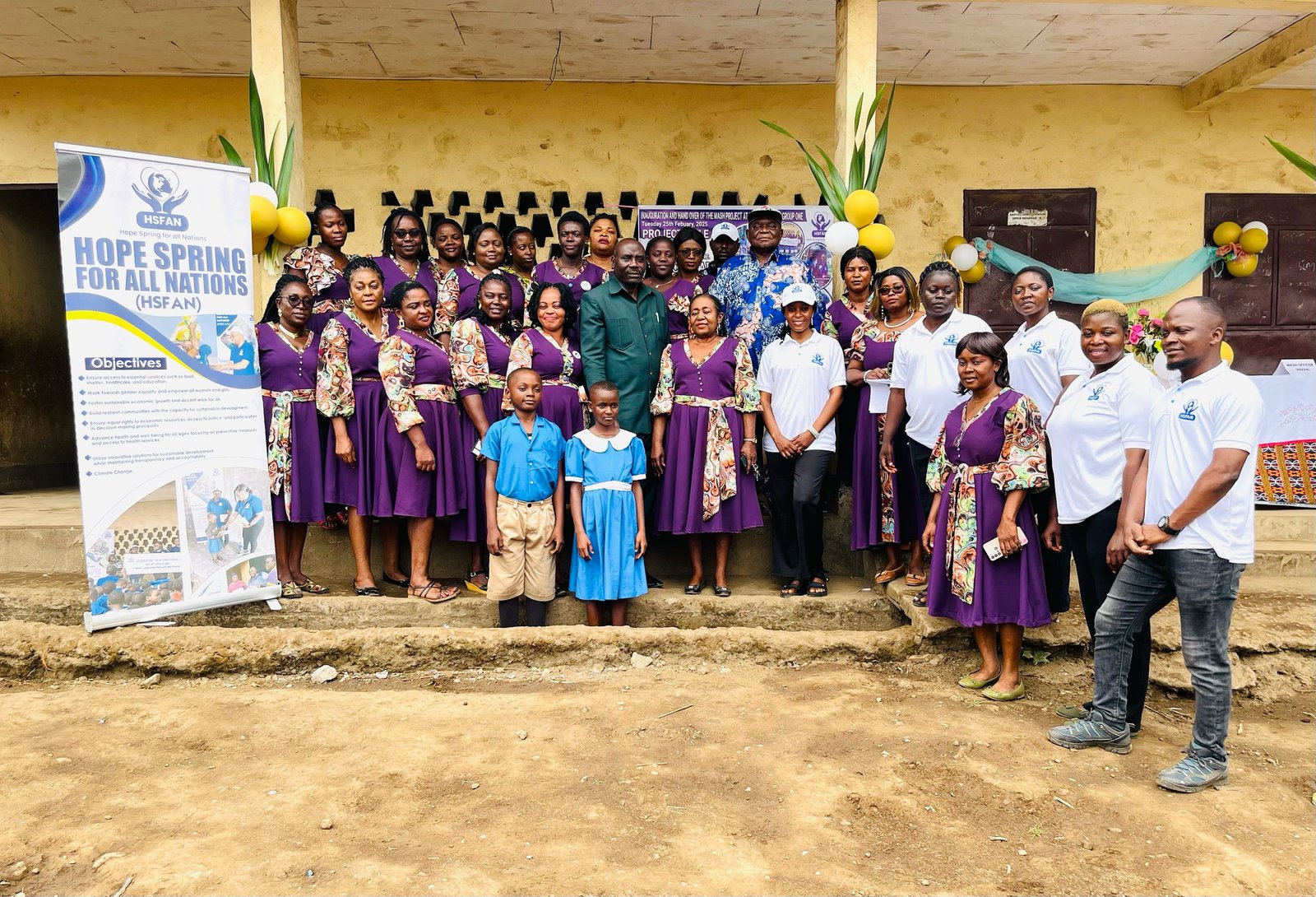
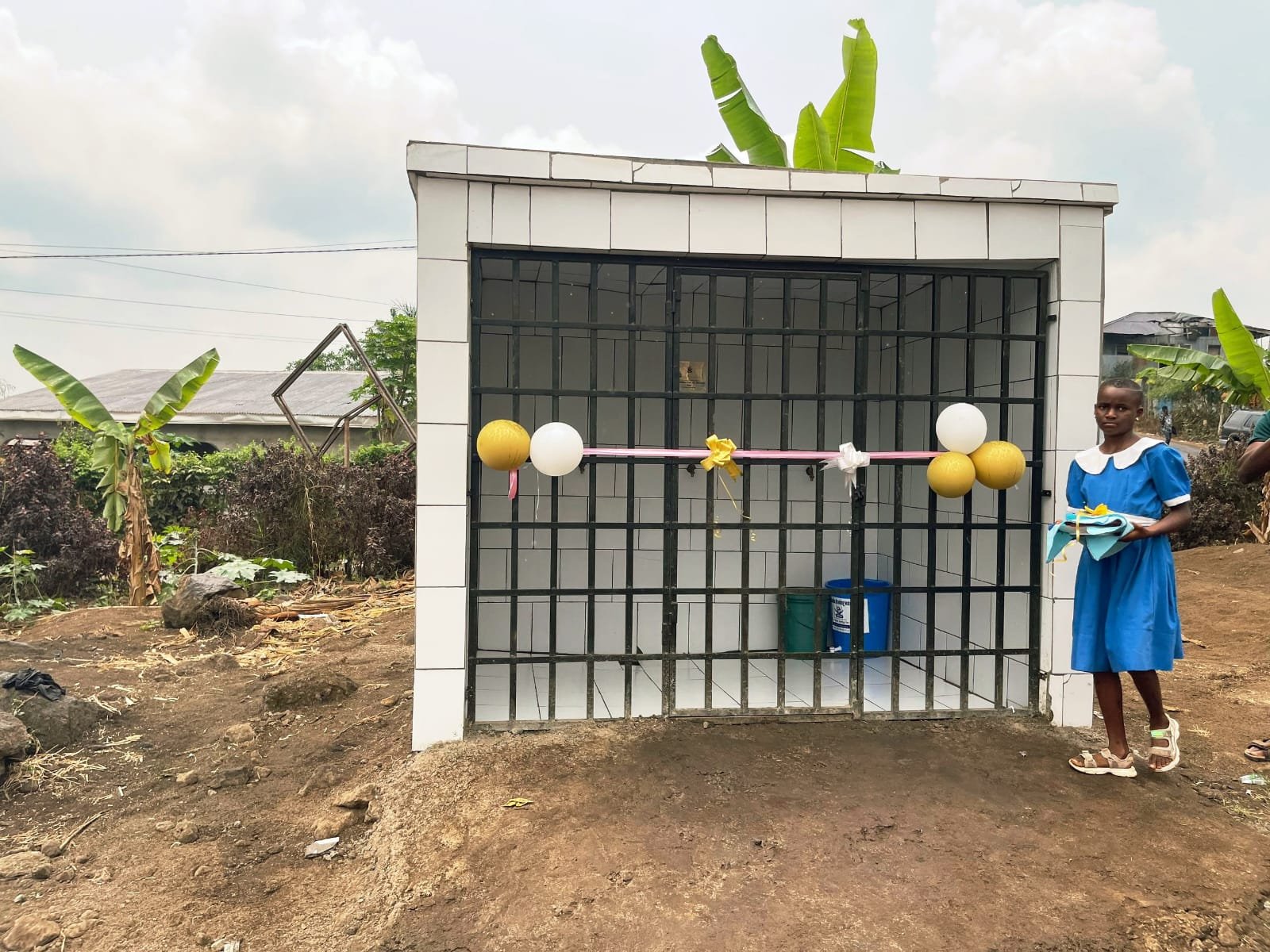
Construction commenced September 2024 on a permanent water stand at Government School Great Soppo, Group 1. This was a multi-phase infrastructure project, continuing into 2025, designed to give 590 school pupils reliable, safe access to drinking water on campus, eliminating the need to bring unsafe water from home or go without.
590 pupils targeted
Permanent infrastructure
Ongoing into 2025
03
GS Great Soppo, Buea
Water Stand Completion
The water stand construction project reached completion in 2025, delivering a functioning, permanent clean water access point at Government School Great Soppo. For 590 pupils, this means arriving at school able to drink, wash hands, and maintain basic hygiene, a foundation that directly supports attendance, health, and learning outcomes.
Permanent asset delivered
590 pupils with clean water
04
Ebanja Community
World Water Day — Ebanja Community (with CEEAC)
HSFAN led and facilitated World Water Day community activities in partnership with CEEAC, using the occasion to build lasting environmental stewardship behaviour and community-level water governance awareness in a community with historically limited access to reliable water sources.
CEEAC partnership
Community mobilisation
05
Fako Division
Environmental Clean-Up & Hygiene Campaigns
Community members were mobilised for clean-up campaigns and environmental awareness sessions that addressed open waste disposal, ecological degradation, and hygiene culture. These sessions complement HSFAN’s water infrastructure work, clean infrastructure requires clean behaviour to sustain its impact.
23 community members
Hygiene behaviour change
Environmental stewardship
06
Fako Division
WASH Capacity-Building Sessions
HSFAN conducted 5 structured WASH capacity-building sessions across Fako Division in 2024, equipping community members with knowledge on hygiene practice, safe water handling, and sanitation maintenance. The sessions generated the highest participation across all programme departments that year.
Hygiene behaviour change
Environmental stewardship
Pillar 2 · Education & School Support
Keeping Children in School When Crisis Pushes Them Out.
The Anglophone crisis has devastated education in Southwest Cameroon, through school closures, infrastructure destruction, teacher displacement, and the economic collapse that forces children into labour instead of classrooms. HSFAN’s education programming addresses these barriers with targeted, school-based interventions that span infrastructure, materials, health, and evidence-gathering to inform future investment.
01
GHS Bokwoango, Buea
Menstrual Hygiene Sensitization
Period poverty and menstrual stigma are among the leading, least-discussed causes of girls dropping out of school in rural Cameroon. HSFAN delivered a structured sensitization programme targeting Forms 2 and 3, the peak puberty transition years, providing education on hygiene practice, menstrual cycle awareness, and stigma dismantling, alongside material distribution.
At GS Great Soppo, a World Menstrual Hygiene Day 2026 outreach reached over 20 girls with sanitary pads and education on menstrual health. The program revealed that many girls still feel ashamed to discuss menstruation, while some boys mocked the topic, highlighting the stigma surrounding periods. The initiative emphasized that menstrual hygiene is not only a health issue but also a matter of dignity, education, gender equality, and human rights, calling for greater awareness and support for girls.
70 girls empowered
Ages 12–18
Sanitary pads distributed
02
Nsuke & Mbabe Communities
Back to School Support — Educational Materials Distribution
At the start of the 2024 school year, HSFAN distributed essential educational materials, books, pens, pencils to pupils in the Nsuke and Mbabe communities. For families displaced by conflict and operating below subsistence, these items remove one of the most direct barriers to a child attending and staying in school.
Books, pens & pencils distributed
1,682 total education beneficiaries
03
Southwest Region
International Day of Education
HSFAN marked the International Day of Education in January 2024 with awareness and celebration activities across target schools, reinforcing the right to education for children whose schooling has been persistently disrupted, and engaging communities as partners in education continuity.
January 2024
Community engagement
04
Southwest Region
International Day of the Girl Child
In October 2024, HSFAN organised activities marking the International Day of the Girl Child, spotlighting the disproportionate educational barriers girls face in conflict-affected communities and connecting this advocacy directly to HSFAN’s ongoing girls’ education and protection programming.
October 2024
Girls' rights advocacy
05
GS Nsuke, Tombel
School Bench Donation
Children studying on broken or absent furniture cannot concentrate, cannot write properly, and cannot learn effectively. HSFAN donated a cohort of school benches to Government School Nsuke, directly improving the physical learning environment for 122 pupils and teachers, as acknowledged explicitly by the community’s Quarter Head.
122 pupils & teachers
06
Partner Schools
International Day of Education Celebrations
HSFAN marked the 2025 International Day of Education with 78 students across partner schools, reinforcing education as a right, not a privilege, and building community solidarity around keeping children in school despite the persistent pressures of conflict and displacement.
03
680 Student Leaders Trained — Tombel Secondary Schools
A needs assessment across 250 students in four secondary schools revealed significant levels of bullying, anxiety, depression, teenage pregnancy, sexual harassment, and substance use. These were not abstract social problem, they were the daily reality of adolescents trying to stay in school through an ongoing crisis that had disrupted everything around them.
HSFAN trained 680 student leaders across these schools in peer support, mental health awareness, GBV prevention, and child protection. The training gave students the knowledge and language to support each other, challenge harmful norms, and transform their school environments from the inside. A school where students look out for each other is a school where more children stay.
Pillar 3 · Child Protection & Gender Equality
Safety, Dignity, and the Right to Live Without Fear.
Armed conflict destroys protection architecture. Reporting pathways disappear. Community norms around violence go unchallenged. Children grow up without adults who know how to keep them safe. HSFAN builds protection culture from within communities, through sustained awareness, direct child engagement, and advocacy campaigns that shift behaviour at population level.
01
Southwest Region
International Women's Day
HSFAN organised International Women’s Day programming in March 2024, combining awareness activities, women’s rights advocacy, and community celebration, building visible solidarity with women in target communities and elevating gender equality as a community priority rather than an external imposition.
02
Southwest Region
Empower Her During Holidays — Weekend with Girls
A targeted July 2024 programme designed specifically for girls during school holidays, a period of heightened vulnerability when girls face increased risk of early marriage, GBV, and economic exploitation. The programme combined safety awareness, self-confidence building, and girls’ rights education.
03
Southwest Region
Women's Skill Development Programme
Launched September 2024 and continuing into 2025, this programme trained women in income-generating skills while embedding gender rights awareness, recognising that economic independence is one of the most powerful protections against gender-based violence and exploitation.
04
Fako & Kupe-Muanenguba
International Women's Day & Gender Assessments
HSFAN organised International Women’s Day events and structured gender assessments in2026, reaching 1,150 community members with programming that combined celebration, rights awareness, and baseline data collection on gender dynamics and GBV prevalence in target communities.
05
Ngusi Village & Tombel
Soccer for Change — Child Protection Through Sport
Soccer for Change uses football as a trusted entry point to deliver structured child protection and life-skills programming. Boys learn to identify unsafe situations, understand consent, trust trusted adults, and access support, all through the language of sport. Piloted in Ngusi and expanding to Tombel, it is one of the most cited programmes in community feedback.
06
Southwest Region
World AIDS Day — HIV Prevention with DAREM
In partnership with DAREM, HSFAN delivered World AIDS Day sensitisation sessions on HIV prevention, transmission, stigma reduction, and sexual health, addressing a critical health and protection gap in communities where healthcare infrastructure is severely limited.
07
Fako & Kupe-Muanenguba
16 Days of Activism Against GBV
HSFAN led the 16 Days of Activism against GBV campaign, the most sustained GBV awareness initiative of the year, reaching 1,150 community members with structured messaging that directly challenged the social norms sustaining violence against women and girls in conflict-affected communities.
Pillar 4 · Livelihoods & Economic Empowerment
From Surviving Displacement to Building a Future.
Displacement does not just take homes, it takes livelihoods, skills networks, markets, and economic identity. HSFAN’s livelihoods programming responds not with dependency but with agency: skills, tools, capital inputs, and the sustained follow-through that transforms a training session into a functioning livelihood. This pillar tracks HSFAN’s longest-running programmes, from the founding 2022 IDP agriculture project to the 2024–2025 youth and women empowerment series.
01
Mamfe Central, Manyu Division
Integrated Commercial Food Crop Farming — 30 IDP Women
HSFAN’s founding livelihoods flagship: a one-day training programme (initiated January, implemented March 2022) equipping 30 displaced women with commercial food crop farming skills, bookkeeping, and personal financial evaluation. SOWEDA provided seeds; HSFAN provided cassava stems, corn seedlings, training, and XAF 874,500 in total investment. 80% of participants rated the programme “satisfied” or “very satisfied.” This project became the model for all subsequent livelihoods work.
02
Mamfe Central, Manyu Division
Emergency Relief Support — 10 IDP Families
HSFAN’s first humanitarian project: delivering emergency food and household supplies to 10 internally displaced families in Mamfe Central, at the height of the Anglophone crisis. With a budget of XAF 634,500, the project provided rice, flour, cooking oil, soap, and basic foodstuffs, addressing the immediate survival gap while building HSFAN’s trust in the conflict-affected community.
03
Buduma, Buea
Christmas Giveaway — Elderly IDP Women
Targeting the most overlooked demographic in humanitarian response, women aged 50 and above who survived displacement with no formal support network. HSFAN delivered food and hygiene kits to 50 elderly IDP women in the Buduma community of Buea. 85% of the target population was reached. All participants expressed heartfelt gratitude; many reported that this was the first formal support they had received since displacement.
04
Southwest Region
Develop Your Talent — Weekend with Boys
A structured August 2024 holiday programme for boys “Develop Your Talent, Embrace Your Uniqueness” designed to reach young men during the period of highest vulnerability to recruitment into armed groups. The programme combined vocational awareness, financial literacy, and personal development programming, building the foundation for economic agency.
05
Southwest Region
Integrated Pest Management — Agriculture Programme
Targeting the most overlooked demographic in humanitarian response, women aged 50 and above who survived displacement with no formal support network. HSFAN delivered food and hygiene kits to 50 elderly IDP women in the Buduma community of Buea. 85% of the target population was reached. All participants expressed heartfelt gratitude; many reported that this was the first formal support they had received since displacement.
06
Southwest Region
Economic Security — 282 Beneficiaries Supported
HSFAN’s Economic Security Department reached 282 vulnerable persons in 2024 through skill development programmes, capacity-building workshops, and entrepreneurial training sessions, equipping women and youth with practical income-generating knowledge and the confidence to pursue financial independence.
07
Fako Division
Weekend Empowerment Sessions — 100 Boys
Continuing and scaling the 2024 Weekend with Boys programme, HSFAN delivered structured empowerment sessions to 100 boys from conflict-affected households in 2025, combining vocational awareness, self-development, and economic agency education at scale.
08
Southwest Region
Women's Income-Generating Skills Training (with GYSCA)
HSFAN trained four women in income-generating activities through a structured partnership with GYSCA, with a dedicated skills development event on 14 May 2025. This targeted intervention is designed to be tracked for long-term income impact and is a deliberate prototype for replication at scale with increased donor funding.
Partner With Us
Join the next chapter of HSFAN's story.
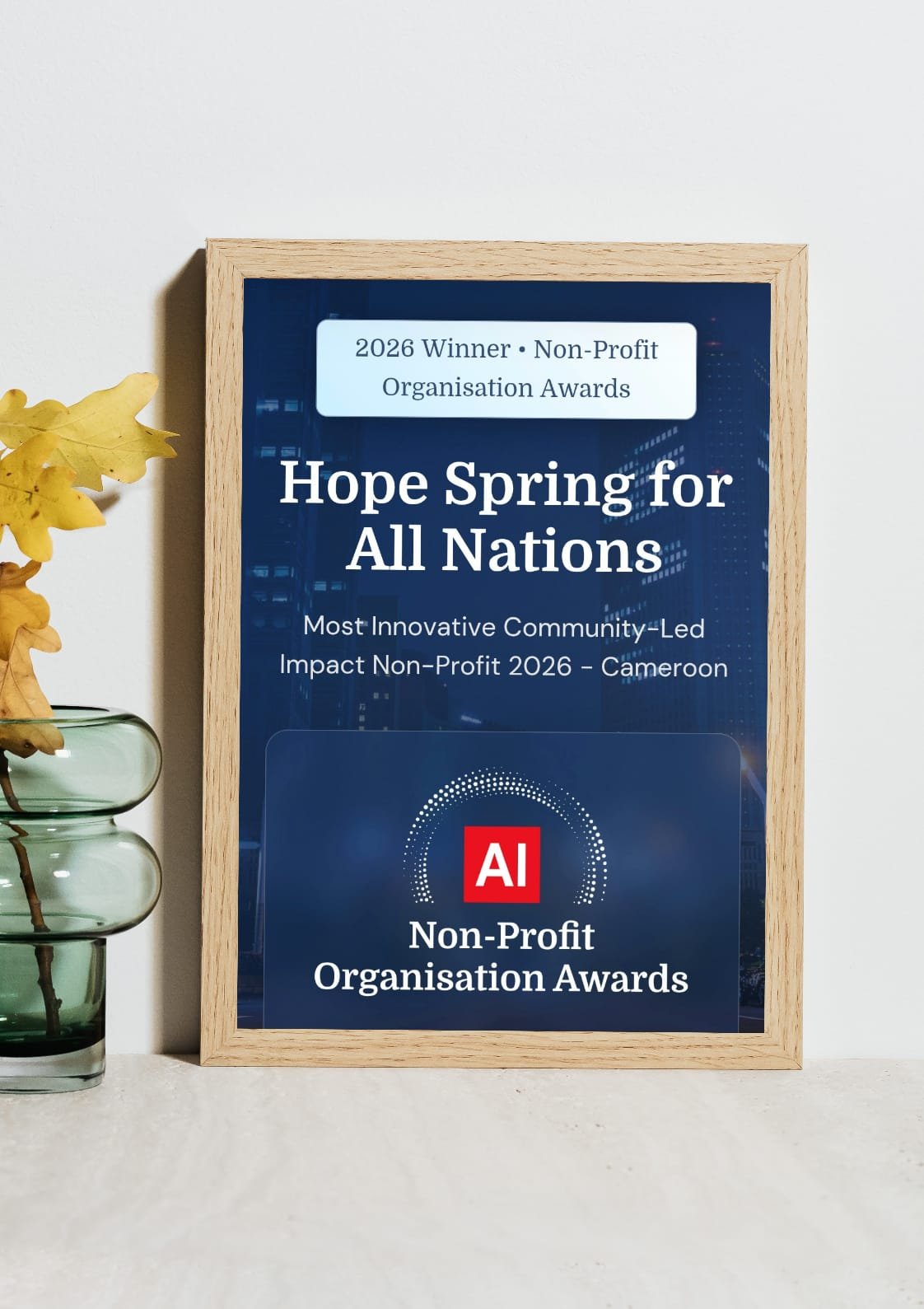
With a 15% budget increase projected for 2026, HSFAN is seeking long-term funding partners to scale WASH, education, protection, and livelihoods across Meme and Manyu Divisions.